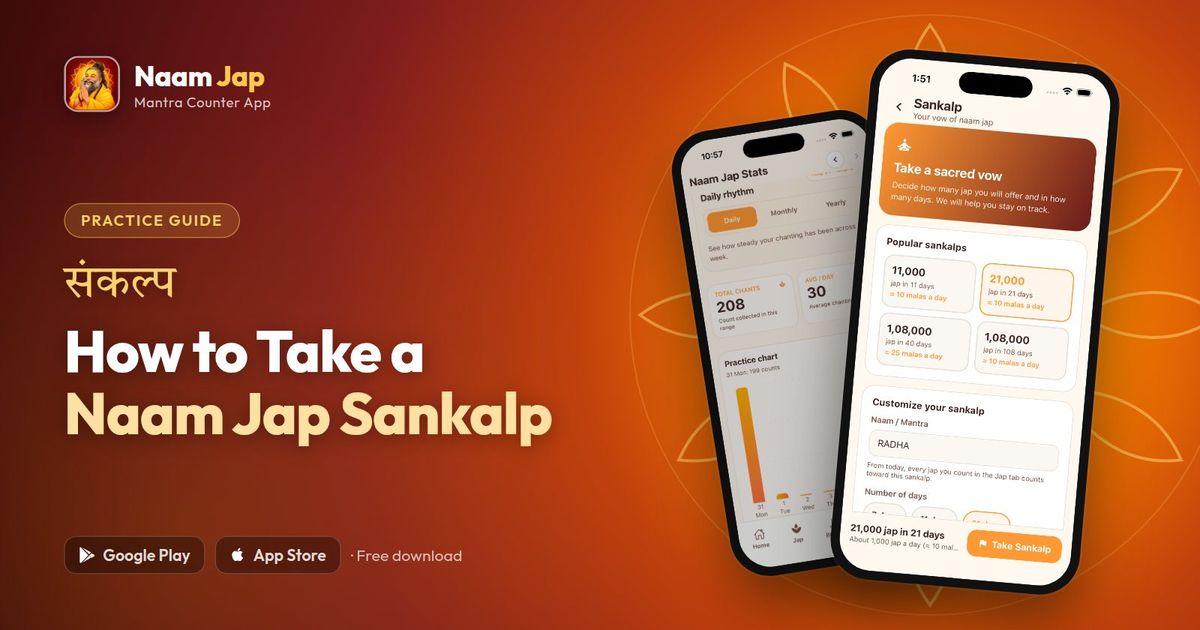
Chanting every day is beautiful. But when you decide "I will offer this many names in this many days", your practice gains direction, discipline and devotion. That decision is called a sankalp — a sacred vow.
What is a sankalp?
The Sanskrit word sankalp (संकल्प) means a firm resolve or intention. In Hindu worship, almost every puja, vrat or jap begins with a sankalp, in which the devotee states what they are about to do and why. A Naam Jap sankalp is simply a vow to chant a chosen name or mantra a fixed number of times within a fixed period — for example 21,000 jap in 21 days.
A sankalp turns a wish into a promise, and a promise into a path.
Why take a sankalp?
- Clear direction: you know exactly how much to chant every day.
- Discipline: a promise to God is easier to keep than a vague plan.
- Deeper devotion: each mala becomes an offering towards a meaningful goal.
- Special occasions: many devotees take a sankalp for Navratri, Shravan, Kartik, a birthday or a family wish.
Popular sankalps and how many malas they need
One mala is 108 jap. Divide your total by the number of days to see how much you need to chant each day. Here are four popular vows:
- 11,000 jap in 11 days: 1,000 jap a day — about 10 malas.
- 21,000 jap in 21 days: 1,000 jap a day — about 10 malas.
- 1,08,000 jap in 40 days: 2,700 jap a day — exactly 25 malas.
- 1,08,000 jap in 108 days: 1,000 jap a day — about 10 malas.
Ten malas are 1,080 jap, so chanting 10 malas a day gives you a small buffer over 1,000. For a short name like "Ram" or "Radhe", one mala usually takes 3–5 minutes, so 10 malas take roughly 30–50 minutes a day. Planning a larger goal? See how to complete 1 lakh Naam Jap.
How to take a sankalp: traditional steps
Customs differ between families and traditions, but a simple and widely followed method is:
- Choose an auspicious start: a festival, Ekadashi, Purnima or simply a peaceful morning.
- Prepare: bathe, sit facing east or north in a clean place, and light a diya if you wish.
- Hold water in your right palm: some devotees add a few grains of rice or a flower.
- State your vow: your name, the mantra, the total count, the number of days and your purpose — for example, "I will chant 'Radha' 21,000 times in 21 days for peace in my family."
- Release the water: let it flow onto the ground or into a plate, offering the vow to God.
- Begin your first mala: start chanting the same day.
If you follow a guru or a particular sampradaya, follow their guidance for the sankalp. What matters most is a sincere heart and a clear intention.
How to take a sankalp in the Naam Jap app
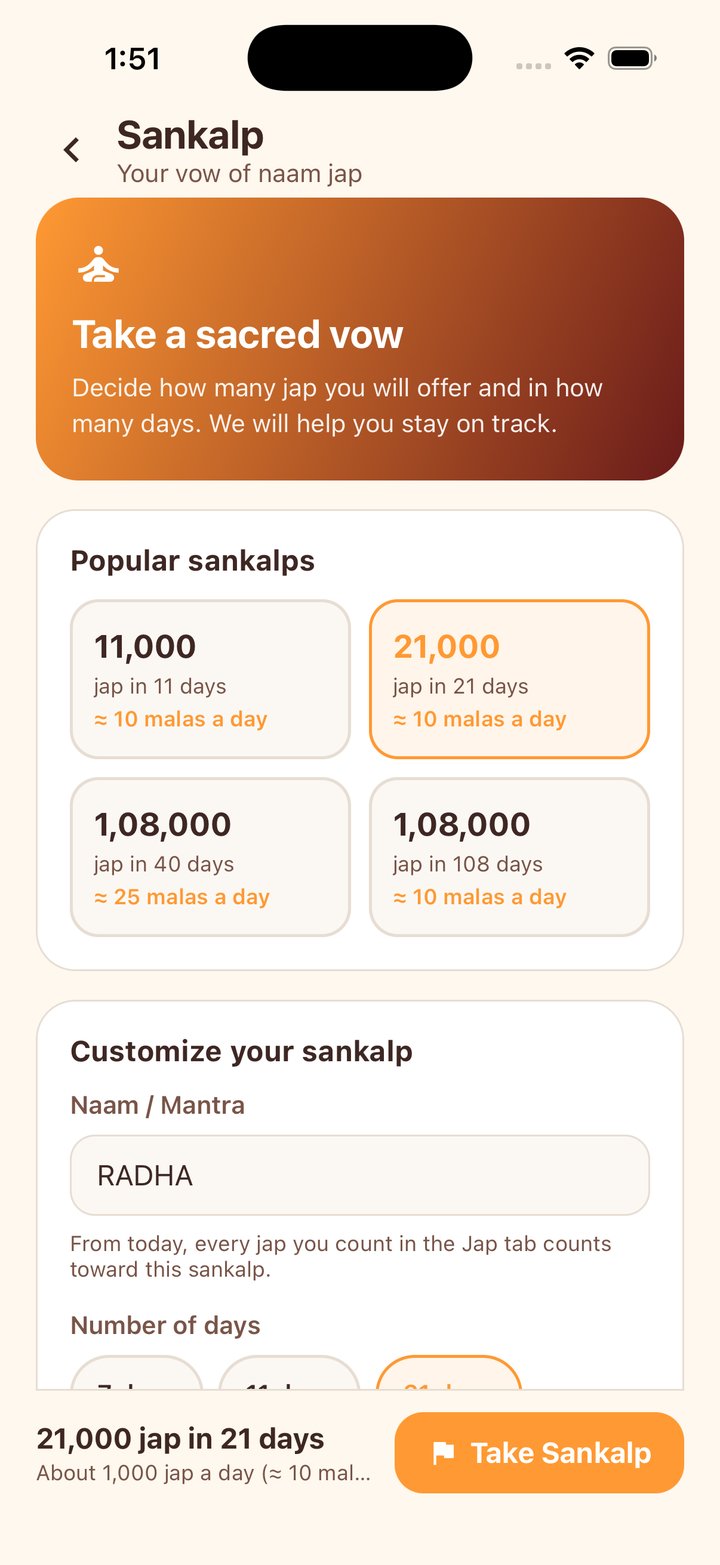
- Open Sankalp: the screen opens with "Take a sacred vow".
- Pick a popular sankalp — 11,000 in 11 days, 21,000 in 21 days, 1,08,000 in 40 days or 1,08,000 in 108 days — or create your own.
- Enter your Naam / Mantra: for example Radha, Ram or Om Namah Shivaya.
- Choose the number of days: the app shows how many jap and malas you need each day.
- Tap "Take Sankalp": from that day, every jap you count in the Jap tab counts towards your sankalp.
Guidelines during your sankalp
- Chant at a fixed time every day, so the vow becomes part of your routine.
- Keep the same name or mantra for the whole sankalp.
- Split the count into morning and evening if the daily number feels large.
- Live simply: many devotees keep a sattvic diet and avoid arguments during a vow.
- If you miss a day, continue the next day and make up the count gently over the following days.
For more tips on staying consistent, read 5 ways to build a lasting chanting habit.
Completing your sankalp
When you reach your total, offer thanks. Families do this in different ways — a small puja or aarti, a temple visit, distributing prasad, feeding the needy or donating to a good cause. In some traditions, a larger jap anushthan is completed with a havan. Then rest for a few days, or take your next sankalp.
Choosing a name for your vow? Explore Radha Naam Jap, Ram Naam Jap or the Hare Krishna Maha Mantra.
Frequently asked questions
What is a sankalp in Naam Jap?
A sankalp is a sacred resolution or vow. In Naam Jap it means deciding, with a clear intention, to chant a name or mantra a fixed number of times within a fixed number of days — for example 21,000 jap in 21 days.
Which sankalp is best for beginners?
A short vow such as 11,000 jap in 11 days (about 10 malas a day) is a good start. Once you complete it comfortably, you can take a longer one like 21,000 in 21 days or 1,08,000 in 108 days.
What should I do if I miss a day during my sankalp?
Do not give up. Continue the next day and add the missed count over the following days. Many devotees also offer a short prayer asking forgiveness for the gap.
Can I change my mantra in the middle of a sankalp?
Traditionally a sankalp is taken for one specific name or mantra, so it is best to complete it with the same one. Take a new sankalp for a different mantra afterwards.
Ready to start your practice?
Free mantra counter for your daily Naam Jap — rated 4.6★ on Google Play.