"Ram" is one of the most loved and most chanted names in India. Two simple syllables carry the memory of Shri Ram's truth, kindness and dharma — and for millions of devotees, they are a daily refuge. Here is how to understand and practise Ram Naam Jap.
The meaning of Ram naam
The name "Rama" is traditionally explained as coming from the root ram, meaning to delight or to rejoice — Ram is "the one in whom all delight" and "the one who gives joy". For devotees, the name is not only a word but the presence of Shri Ram himself.
In the Ramcharitmanas, Goswami Tulsidas praises the Name again and again, even describing it as greater than the form of the Lord, because anyone can hold the Name in their heart at any time. Many saints, from Kabir to Samarth Ramdas, also gave a central place to Ram naam.
Two letters, endless grace — such is the Name of Ram.
Popular Ram mantras
- "Ram" or "Sita Ram": the simplest and most common forms, ideal for beginners.
- "Jai Shri Ram": a joyful call of victory and devotion.
- "Shri Ram Jai Ram Jai Jai Ram": the 13-syllable (trayodashakshari) mantra, widely associated with Samarth Ramdas.
- "Om Shri Ramaya Namah": a respectful salutation to Shri Ram.
If you have received a mantra from a guru, follow that. Otherwise choose the form you feel drawn to and keep it for a long time.
How to chant Ram naam daily
- Fix a time: morning or evening — see the best time for Naam Jap.
- Start with one mala: 108 repetitions, slowly and clearly.
- Remember Shri Ram: picture his gentle face, or simply feel the meaning of the Name.
- Chant in spare moments too: walking, waiting or travelling — silently or in a whisper.
- Keep count: use a mala or a digital counter so you can grow steadily.
Ram naam lekhan (writing Ram naam)
Many families keep a Ram naam notebook and write the Name daily — a page of 108 names is a common target. Writing engages the hands, eyes and mind together and is especially loved by children and elders. Read our complete guide to Likhit Jap for simple guidelines.
Ram naam and Hanuman ji
Hanuman ji is remembered as the greatest devotee of Shri Ram, and the Ram naam is closely linked with his worship. Many devotees chant Ram naam along with the Hanuman Chalisa, especially on Tuesdays and Saturdays.
New to chanting? Start with What is Naam Jap? or set yourself a long-term goal with how to complete 1 lakh Naam Jap.
Frequently asked questions
What is the simplest Ram mantra to chant?
The simplest is the name itself — "Ram". Other popular forms are "Sita Ram", "Jai Shri Ram" and the 13-syllable mantra "Shri Ram Jai Ram Jai Jai Ram".
How many times should I chant Ram naam daily?
Begin with one mala (108) a day and increase slowly to a number you can keep every day, such as 5 or 11 malas.
Can I write Ram naam instead of chanting it?
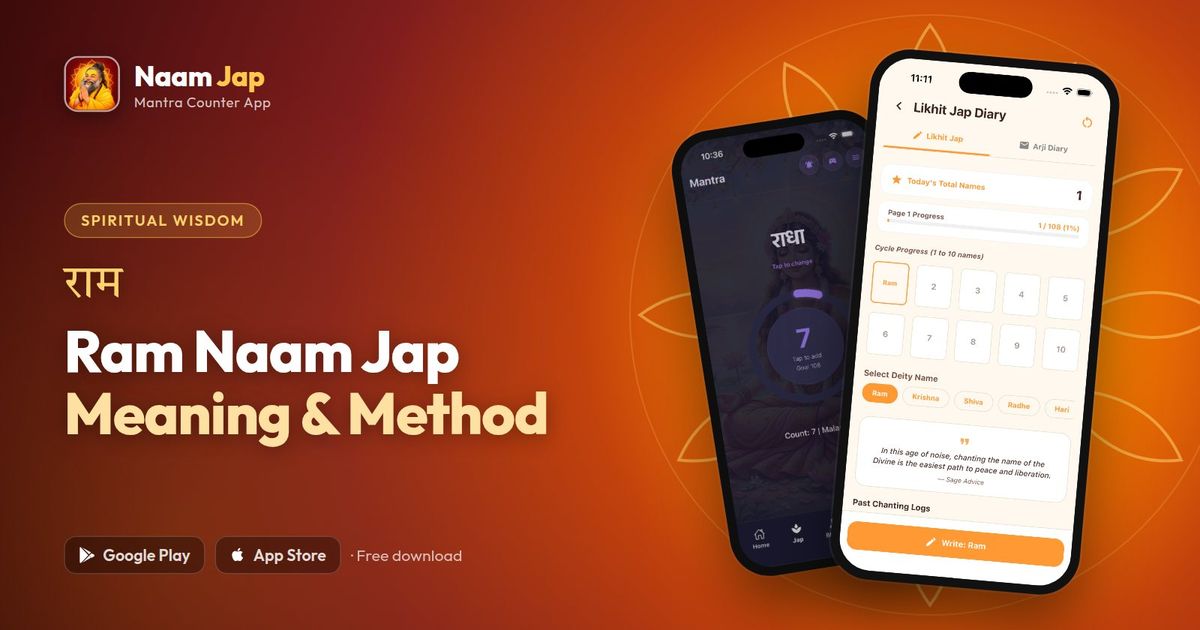
Yes. Writing Ram naam, called Ram naam lekhan or Likhit Jap, is a well-loved practice. You can write in a notebook or use the Likhit Jap Diary in the Naam Jap app.
Ready to start your practice?
Free mantra counter for your daily Naam Jap — rated 4.6★ on Google Play.