Naam Jap is one of the simplest and most loved spiritual practices of India. It needs no special place, no expensive items and no complicated ritual — only the Divine Name and a sincere heart. This guide explains what Naam Jap means in English, the different ways to chant and how you can begin a steady daily practice.
The meaning of Naam Jap
The phrase comes from two words: Naam (name) and Jap (repetition). Naam Jap therefore means repeating the name of God — Ram, Krishna, Radha, Shiva, Hari, Durga or whichever form you feel devoted to. It is also written as naam jaap, nam jap or naamjap, and is closely related to naam smaran (remembering the Name) and naam sankirtan (singing the Name).
Across the bhakti tradition, saints such as Tulsidas, Kabir, Mirabai, Guru Nanak and Chaitanya Mahaprabhu praised the Name as a direct and simple path to the Divine. Many teachers say that in the present age (Kali Yuga) the Name is the easiest practice available to everyone — rich or poor, young or old, at home or on the move.
The Name is the boat that carries the soul across the ocean of worldly worries.
Naam Jap meaning in English
In English, Naam Jap translates to "repetition of the Divine Name". The word Naam (also spelled Nam) means "name" and Jap (also Jaap or Japa) means "to repeat" or "to murmur". Together, Naam Jap describes the devotional practice of chanting a name of God — such as Ram, Krishna, Radha, Shiva or Om — again and again, with love and attention. You may also see the spelling Nam Jap, Naam Jaap or simply Name Jap; they all refer to the same practice.
Naam Jap, mantra jap and meditation — what is the difference?
A mantra is a sacred sound or verse, such as "Om Namah Shivaya" or the Gayatri mantra. A name is simply the name of God, such as "Ram" or "Radhe". Both are chanted in the same way, so in everyday language people often use "naam jap" and "mantra jap" interchangeably. Compared with silent meditation, Naam Jap gives the mind something definite to hold on to, which many beginners find easier than trying to "empty" the mind.
The three ways to chant
Traditional texts describe three styles of jap. All are valid — choose the one that suits your situation.
- Vachik Jap (aloud): chanting clearly so you can hear it. Great for beginners because the sound holds your attention.
- Upanshu Jap (whispered): the lips move softly and the sound is almost silent. Ideal on a bus, in an office or late at night.
- Manasik Jap (mental): repeating the name only in the mind. Traditionally considered the most subtle form, and easier once concentration has grown.
How to choose your name or mantra
If you have received a mantra from your guru, chant that. If not, choose the form of God you naturally feel love for. Popular choices include "Radhe Radhe", "Ram" or "Sita Ram", "Hare Krishna", "Om Namah Shivaya" and "Om Namo Bhagavate Vasudevaya". Try to stay with one name for a few months instead of changing every week — depth comes from familiarity.
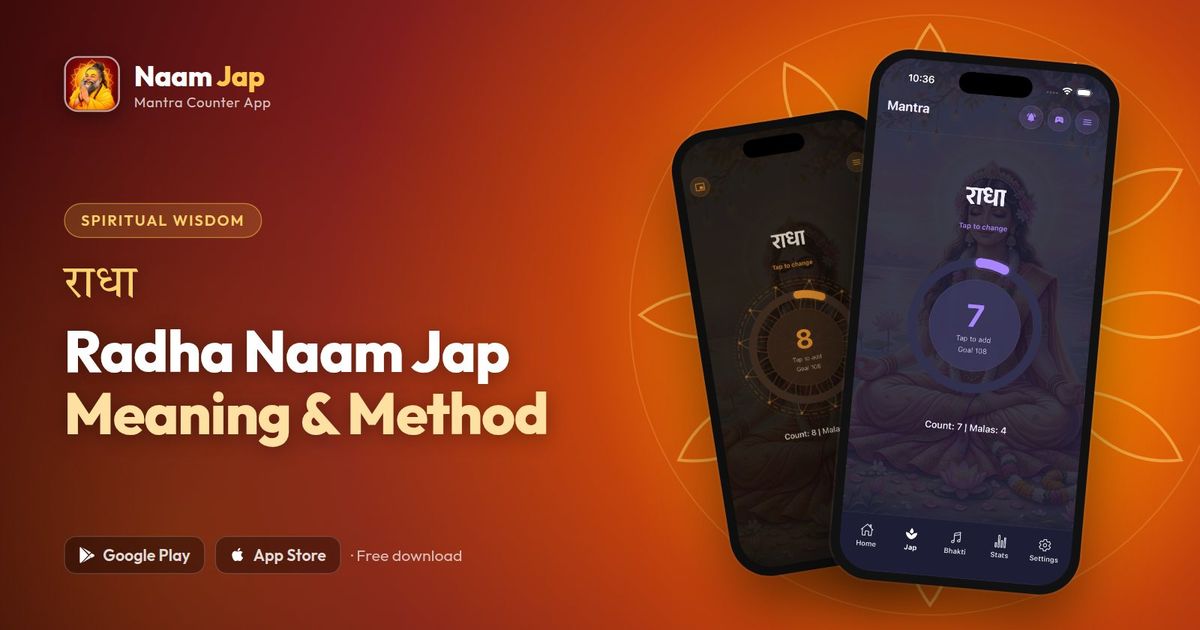
Drawn to Shri Radha? Read our guide on Radha Naam Jap: meaning and method.
What you need to begin
- A name: the one you chose above.
- A way to count: a tulsi or rudraksha mala of 108 beads, your fingers, or a digital counter.
- A fixed time: even 10 minutes, at the same time every day.
- A quiet corner (optional): helpful, but not required — the Name can be chanted anywhere.
Wondering why malas have 108 beads? See why a jap mala has 108 beads.
A simple 10-minute daily routine
- Fix a time: early morning is traditional, but any regular time works. Read about the best time for Naam Jap.
- Settle down: sit comfortably with your back straight and take three slow breaths.
- Set an intention: offer the chanting to God, not to a target number.
- Chant one mala (108): keep a steady rhythm; there is no need to rush.
- Sit quietly for a minute: notice how the mind feels after the Name.
Common beginner mistakes
Starting too big. Eleven malas on day one often becomes nothing by day five. Begin with one mala and grow slowly.
Chanting while scrolling. Give the Name your full attention, even if it is only for ten minutes. Put the phone on silent, or use only the counter screen.
Judging yourself when the mind wanders. Wandering is normal. Gently bring the attention back to the Name, again and again. That returning is the practice.
Tracking your Naam Jap
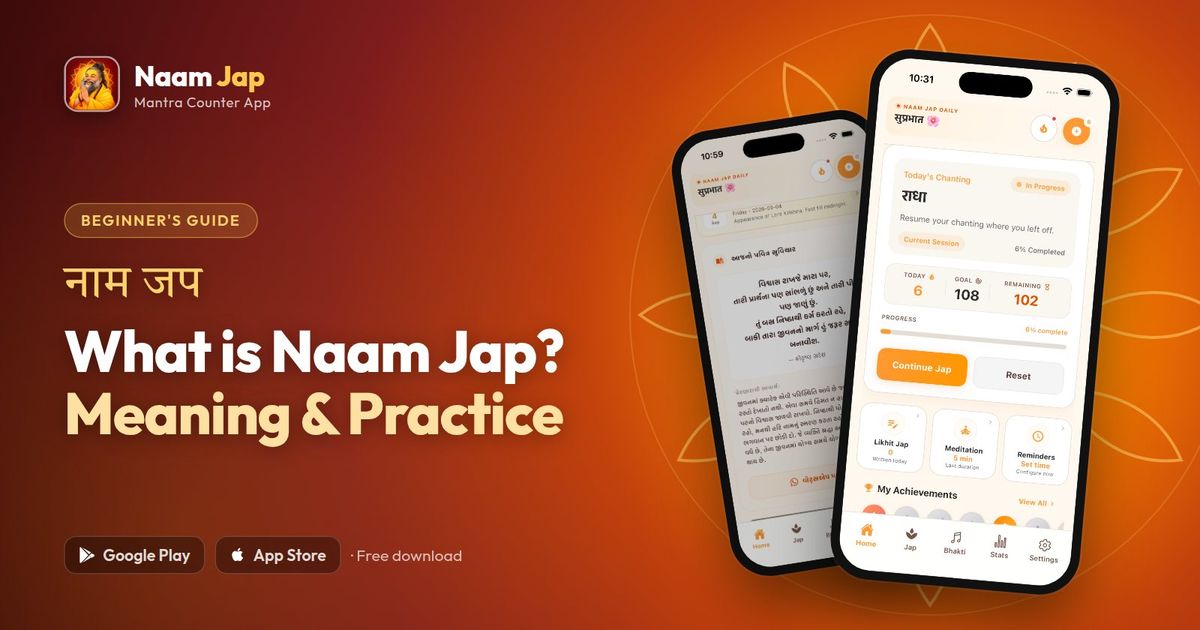
Tracking is not about pride; it is about honesty with yourself. Seeing your streak and monthly total gently motivates you on days when you feel lazy. The Naam Jap app shows today's count, your goal, total malas and a streak calendar, so you always know where you stand. For more ideas, read 5 ways to build a lasting chanting habit and 7 benefits of daily Naam Jap.
Start today with just one mala. Let the Name do the rest.
Frequently asked questions
What is the meaning of Naam Jap?
"Naam" means name and "Jap" means repetition. Naam Jap is the practice of repeating a name of God — such as Ram, Krishna, Radha, Shiva or Hari — with devotion, either aloud, softly or in the mind.
Can I do Naam Jap without a guru?
Many saints teach that the Divine Name can be chanted by anyone, at any time. If you have received a mantra from a guru, chant that; otherwise choose the name you feel closest to.
How many times should a beginner chant?
One mala (108 repetitions) a day is a good start. Depending on the length of the name and your speed, it usually takes about 5–15 minutes. Daily consistency matters more than a large number once in a while.
Can I chant without a mala?
Yes. You can count on your fingers or use a digital jap counter such as the Naam Jap app, which adds one mala to your total every time you reach 108.
What does Naam Jap mean in English?
"Naam" means name and "Jap" means repetition. In English, Naam Jap translates to "repetition of the Divine Name" — a devotional practice of chanting God's name again and again with love and attention.
Ready to start your practice?
Free mantra counter for your daily Naam Jap — rated 4.6★ on Google Play.