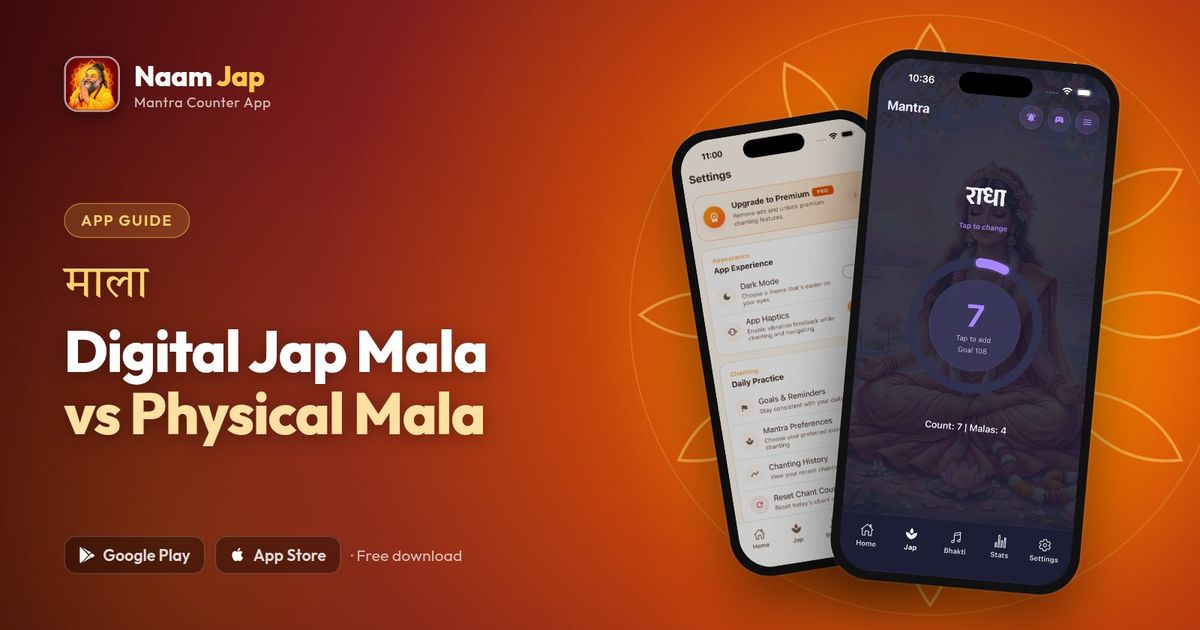
A physical mala is sacred and deeply revered. But what about the commute, the office or the hospital waiting room, where carrying beads is not always practical? This is where a digital jap mala can help. Here is an honest look at both.
The physical mala: strengths
- Tradition and touch: the feel of tulsi or rudraksha beads helps many people concentrate.
- No screen: no notifications, no temptation to check messages.
- A personal companion: many devotees feel a deep connection with a mala they have used for years.
The physical mala: limitations
- Easy to lose count: after several malas it is hard to remember how many you have done.
- No record: you cannot see last month's total or your longest streak.
- Not always practical: it can be awkward to use a mala in some public places.
The digital jap mala: strengths
- Always with you: your phone is already in your pocket.
- Accurate count: each tap is counted, and you can resume where you left off.
- Haptic feedback: a soft vibration on every tap lets you chant with eyes closed.
- Goals and history: set a target and see daily, monthly and yearly totals, streaks and charts.
- Reminders: a gentle notification at your chosen time helps you never miss a day.
The digital jap mala: limitations
The biggest risk is distraction — a phone is full of other apps. The solution is simple: turn on "Do Not Disturb", keep only the counter screen open and, if possible, keep the phone in your lap and focus on the vibration rather than the screen.
The beads are a tool to count the Name; the goal is to make the Name count in your heart.
The best of both: a hybrid routine
Many people chant their morning malas on a physical mala at home and use the app during the day — on the metro, during a lunch break or before sleep. The physical mala keeps the tradition alive, while the app keeps your streak going and reminds you on busy days.
How to use the Naam Jap app as a digital mala
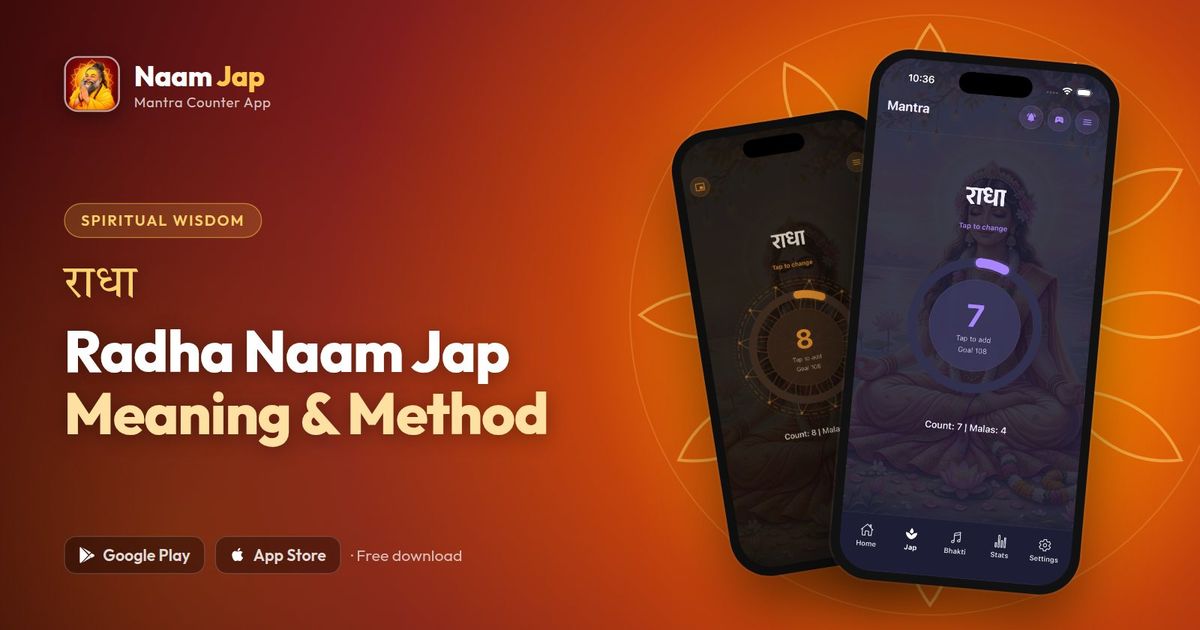
- Choose your name: tap the name on the counter screen to change it — for example Radha, Ram or Krishna.
- Set your target: 108 for a full mala, or 27 or 54 if you prefer shorter rounds.
- Tap the counter for each name: at 108 the counter resets and one mala is added to your total.
- Turn on reminders: pick a time that suits your routine.
- Check your stats: watch your streak and monthly chart grow.
So, which should you choose?
If you chant mostly at home and love the feel of beads, a physical mala is wonderful. If you chant on the move, want an accurate record or struggle with consistency, a digital counter is a practical help. For most people, using both is the easiest way to chant every single day.
Whichever you choose, what matters most is regularity. For ideas, read 5 ways to build a lasting chanting habit and why a mala has 108 beads.
Frequently asked questions
Is chanting with a digital mala spiritually valid?
Most teachers agree that the power of Naam Jap lies in the Name and your bhava (devotion). A counter — physical or digital — is a tool to keep count and stay consistent.
Can I use the Naam Jap app without looking at the screen?
Yes. The app gives a gentle vibration (haptic feedback) with each tap, so you can keep your eyes closed or lowered while you chant.
Does the Naam Jap app work offline?
Yes. The core features — jap counting, the sadhana checklist, stats and settings — work without an internet connection.
Is the Naam Jap app free?
Yes, Naam Jap is free to download on Android and iOS. An optional Premium plan removes ads and unlocks extra devotional content and features.
Ready to start your practice?
Free mantra counter for your daily Naam Jap — rated 4.6★ on Google Play.